Flat Clearance Euston — Recycling and Sustainability Commitment
At Flat Clearance Euston we place sustainability at the heart of every clear-out. Our approach to an eco-friendly waste disposal area and a sustainable rubbish area goes beyond simple collection: we prioritise reuse, maximise recycling and reduce landfill. This page explains our targets, partnerships and the practical steps we take across the Euston area and neighbouring boroughs to make flat clearance in Euston low-impact and community-focused.
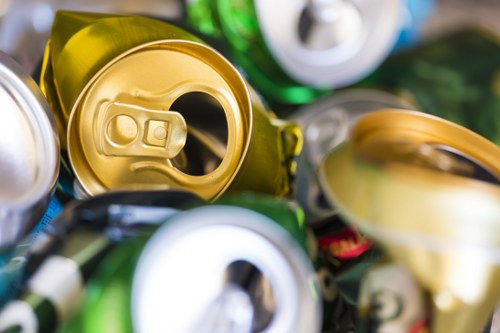 Our operations align with local waste separation schemes used by Camden and adjacent boroughs. We follow kerbside separation models that prioritise glass, paper and cardboard, food and garden organics, and mixed dry recycling where applicable — mirroring the councils' emphasis on source segregation. By sorting at source and in our own staging areas we lower contamination and increase the value of recyclable streams.
We have set a bold recycling percentage target to drive continuous improvement: our aim is to divert at least 85% of reusable and recyclable materials from landfill across all Euston flat clearance projects within the next two years. This 85% recycling target is monitored monthly and feeds into operational changes — from crew training to vehicle routing and on-site sorting procedures.
To achieve this we adopt a waste hierarchy-first approach: reduce, reuse, recycle. Crews are trained to identify salvageable furniture, appliances and building materials for onward reuse or refurbishment. Bulky items that are beyond repair are broken down and sorted into recyclable fractions to ensure as much material as possible enters material recovery facilities rather than landfill.
 We work closely with local transfer stations and material recovery centres in north London. Where appropriate, recyclable loads are routed to nearby transfer stations and MRFs (material recovery facilities) that specialise in glass, metal, textiles and construction waste. These partnerships help us maintain traceability of waste streams and ensure an accountable, low-impact route for recyclable goods collected during Euston flat clearances.
Our network includes formal partnerships with charities and community groups to increase reuse opportunities. We regularly coordinate collections of usable furniture, working with local charities that support homelessness prevention and community redistribution. By diverting serviceable items to charities we support local social missions while keeping functional goods in use for longer.
Examples of partnership activity include scheduled drop-offs to charity stores, direct collection for refurbishment programmes, and collaboration with social enterprises that repair electronics and white goods. These links help establish a circular economy in the Euston area: fewer items become waste and more supply chains for reused goods develop locally.
 Transport is a crucial element of our carbon reduction strategy. We operate a fleet of low-carbon vans and vehicles on low-emission routes, including electric and Euro 6 hybrid vans where feasible, to reduce emissions during flat clearances in Euston. Route optimisation and consolidated pick-ups further cut mileage and emissions, supporting an overall low-carbon footprint for rubbish removal.
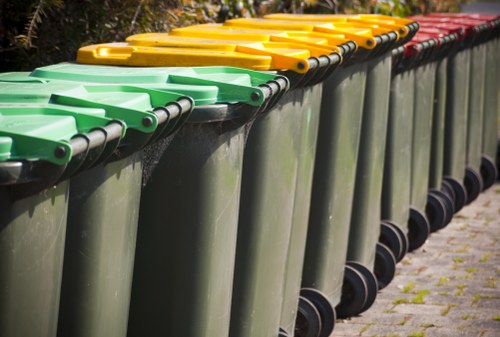 On-site best practice forms part of our sustainability protocol: crews carry separation kits and labelled containers so that recyclable materials — such as glass, paper, cardboard, metals, and textiles — are segregated at the point of collection. Hazardous items are isolated and handled according to environmental regulations to protect the local eco-friendly waste disposal area and ensure safe disposal.
We also maintain transparent documentation for each job: tonnages, diversion rates, destination transfer stations and charity recipients are recorded and reported internally. This allows us to evaluate progress against our recycling percentage target and to refine processes for future flat clearances in Euston and surrounding streets.
Key elements of our sustainable rubbish area strategy include:
- High diversion goals: an 85% recycling and reuse target across operations.
- Local transfer station use: routing recyclable loads to nearby transfer and MRF facilities for efficient processing.
- Charity partnerships: direct redistribution of reusable furniture and appliances to local non-profits.
- Low-carbon fleet: electric and hybrid vans where possible, plus route optimisation to reduce emissions.
- Compliance and traceability: detailed records of waste streams and destinations.
We encourage clients to adopt simple pre-clearance sorting — separating textiles, paper/cardboard and hazardous waste — which helps us reach our recycling goals more efficiently. Small changes at the point of clearance have an outsized impact on overall diversion rates, especially when aligned with borough recycling schemes that favour separated streams.
Flat clearance in Euston should be both efficient and environmentally responsible. By combining trained crews, low-carbon vans, strong charity links and reliable transfer station partnerships we create an eco-friendly waste disposal area wherever we work. That means less landfill, more reuse and a measurable reduction in the carbon footprint of each job.
Measuring Success and Continuous Improvement
Reporting, Targets and Community Benefits
We publish internal reports that track recycling percentage targets, the number of items diverted to charities and tonnages sent to transfer stations. Continuous improvement is driven by operational audits, stakeholder feedback (from charities and transfer stations) and investment in cleaner vehicles. Our long-term objective is to make sustainable flat clearance the default option across Euston, creating a resilient and community-centred model for rubbish removal.